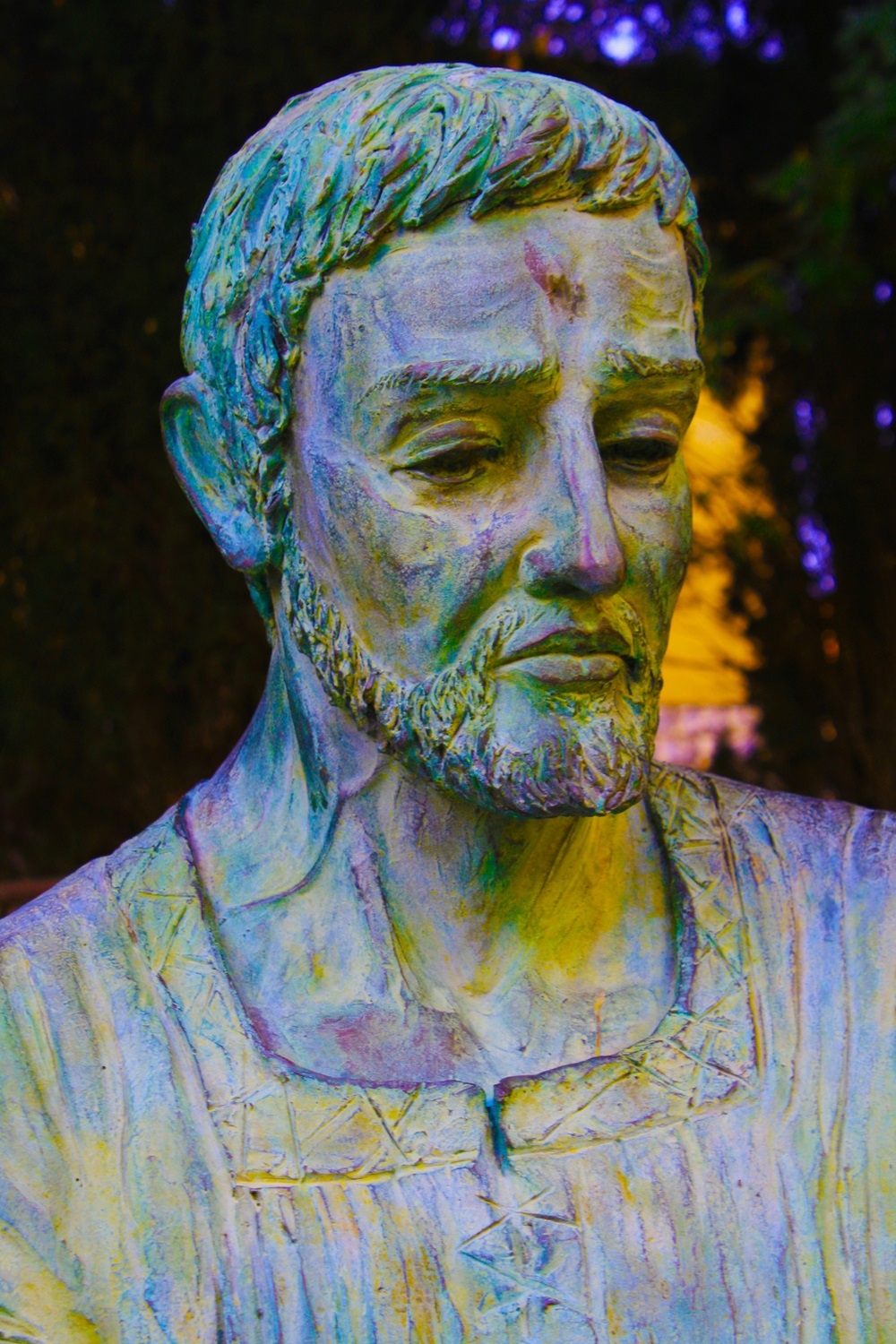
Peter Denies Jesus | Luke 22:54-62
During Jesus’ trial, there’s a captivating moment where time seems to stand still. When Peter denies Jesus for a third time, the rooster crows, and Jesus looks. Straight. At. Peter. In that moment, there’s realization, transition and intimacy. In it, we see that we cannot save ourselves.
One of the things that intrigues me about this story is this moment toward the end when Jesus turns and looks straight at Peter. There’s something captivating about that moment, a freezing of time. It’s the peak, or climax, of the story, the hinge that everything turns on.
There’s so much wrapped up in it. For one thing, it’s a moment of realization. Did you notice that it’s not until Jesus looks at Peter that Peter fully grasps what he’s done? It says that “just as he was speaking, the rooster crowed, and the Lord turned and looked straight at Peter. Then Peter remembered the words the Lord had spoken to him.” It wasn’t until then that Peter remembers.
Those three times that Peter denies Jesus, telling people that he wasn’t with Jesus, he didn’t know him, he didn’t even know what they were talking about–Peter didn’t even seem to add up what he was doing in those moments. He didn’t connect his actions with Jesus’ comments just hours before.
Sin can be like that. It sneaks up on you. You make a little comment, no big deal. One white lie
that doesn’t hurt anyone. You take one small thing that’s not yours, no one will miss it. One small peek of that website or show you shouldn’t be watching, but a few seconds won’t hurt.
Until suddenly you’re neck deep in the thing that you swore you would never do. That’s where Peter found himself in that moment when Jesus looked at him.
This is also a moment of transition. Up until this point, Peter has been full of bravado and boasting. It doesn’t matter what happens, he’s with Jesus. Big words.
But when Jesus gets his attention, looking straight at him, Peter goes from brave to broken. We’re told he goes “outside and weeps bitterly.” This is crying with deep, deep regret.
This is a moment of intimacy, almost like a private moment between Peter and Jesus. They’re making eye contact in the middle of a hostile crowd. Jesus takes time in the middle of his trial to find Peter.
As we mentioned, Peter doesn’t remember Jesus’ words until that moment. His sin was trying to hide, to go under the radar and not be considered. This look from Jesus forces Peter to come face to face with his failure, to not ignore it, but to have to deal with it. And that can be painful.
Clearly, this is a painful process for Peter. And yet, it is so necessary. Kent Hughes compares Peter to an athlete that’s naturally talented, but he doesn’t know how to listen to coaching. He needs to be humbled and to realize that he cannot do it himself, he cannot depend on himself.
Even Peter needs a Savior.
We so easily slip into that same arrogance that Peter had. We think we can handle things on our own. We think that we can be good enough on our own. But if Peter–this man who has been with Jesus for three years now, who’s seen miracles, who’s walked on water–if Peter can lose courage and disown his Lord in this moment, who are we to think we are any better? We too need a Savior, and it’s not us.
Put yourself in the shoes of Luke’s early audience for this book. It’s the early years of the church, and the audience would have heard about the great Apostle Peter, a leader in the church. They may have even known Peter personally. Peter has preached amazing sermons, he’s healed people, he’s escaped from prison. He is legendary.
So imagine reading this about the great Peter. What? Peter disowned Jesus?
This story would have served as a reminder that even the best will fail. It would have taught them humility in themselves, and that Jesus alone is their Savior. Yes, support their leaders, encourage their leaders, follow their leaders, but understand that even they will fail at times. Only Jesus will not fail them.
Our key truth for today is that you cannot save yourself.
This was a reality that Peter needed to come face to face with, and it took this deeply painful experience to recognize his limitations.
You, reader, have time right now while you’re still alive to come to terms with your own limitations and to realize that you cannot save yourself. When you die and meet Jesus, it’s too late. You need to do it now. Don’t learn things the hard way like Peter had to.
Peter’s story of denial comes in two parts: Luke 22:31-24 and Luke 22:54-62. The two parts are separated by an account of Jesus praying on the Mount of Olives and his submission to the arresting crowd. I think Luke intentionally sandwiches the story of Jesus’ courage between Peter’s courageous words and epic failure because it highlights what Jesus did. Jesus courageously submitted to the Father’s will.
Peter cannot save us or himself. Only Jesus can save.
It’s not about great leaders. It’s not about saving ourselves. It points us to Jesus.
So this story is telling us, don’t look to Peter to save you. Don’t look toward saints of the past to save you. Don’t look to Mary. Don’t look to pastors or Christian leaders today to save you. Don’t even look to yourself.
None of these can save you. But Jesus can.
Today as you go, if you have been trusting in yourself, thinking that you’re good enough to get to heaven, learn from Peter’s story. Even he failed. Even he needed a Savior. And Jesus was right there for him.
Jesus is right there for you too. Turn to him. Trust him. Because you cannot save yourself.
 Amy C Walters
Leave a comment