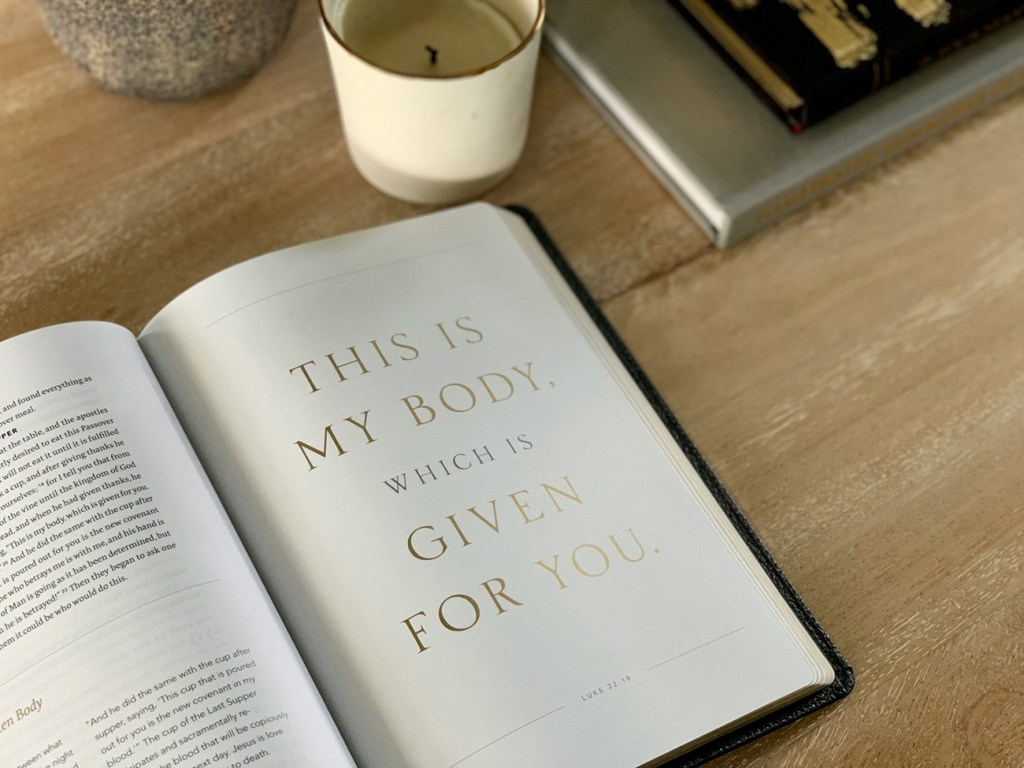
The Last Supper | Luke 22:7-23
One of the main commands in the story of the Last Supper is to “do this in remembrance of me.” The command seems simple enough and yet we tend to be distracted and forgetful people. It’s important for us to understand the how and the why of remembering.
Jesus says a lot of things in this story that probably baffled the disciples. The secrecy of the location, the talk of his body and his blood, and of course the command, “do this in remembrance of me”–something that you would say about someone who’s dead, but Jesus was right there with him.
In one sense, the command to remember fits perfectly with the Passover. This holiday was designed to commemorate a very significant event in Israel’s history. It reminded the people of what God had done for them.
Even before the first Passover was over, God told Israel in Exodus 12:24, “Obey these instructions as a lasting ordinance for you and your descendants.” This remembrance was meant to continue for generations to come.
In each of the next several books of the Bible, the Passover is mentioned: Leviticus, Numbers, Deuteronomy, Joshua. But then there’s a big gap where Passover isn’t mentioned or celebrated.
It’s not until 2 Kings 23 that Passover is mentioned again. King Josiah reinstates it after rediscovering the book of the law that they had lost track of. So they began to observe Passover again.
But again, the observance doesn’t last long. We get to another big gap, and it’s not until Ezra 6 when exiles return to Israel after they had been taken captive. So even this holiday that’s intended to remember what God has done keeps getting forgotten.
By the time of Jesus’ day, Passover is once again being celebrated on a regular basis. And there’s a formula for how it’s observed. But Jesus changes some of that formula.
He makes it about himself. He talks about the bread as his body. He talks about the wine as his blood. And when he takes the bread, he says, “Do this in remembrance of me.” It’s not “remember the Passover, remember when you were slaves in Egypt, remember the lamb.” It’s not any of that. It’s to remember Jesus.
That’s going to be our key truth for today. Remember Jesus.
I know that’s a really simple and obvious statement. But the rest of this blog post is going to show that how and why Jesus wants to be remembered are both really important.
Let’s first talk about how we should remember him. The question about how someone wants to be remembered deals with someone’s legacy. Greg Weybright, in a sermon entitled “The Unexpected Photograph,” points out that most great people in history would probably want to be remembered for the battles that they’ve won or the books that they’ve written. You want to be remembered for something great.
Or think about it in terms of a portrait. If someone were to ask for a picture of you that they could circulate after your death, what picture would you give them? You would definitely find a good picture of yourself, something that’s really flattering. Or maybe you would also include some of the people that you love to show others how loved you were.
What about Jesus? As Greg Waveright points out, Jesus basically gives us a picture of his corpse. That’s how Jesus wants to be remembered, by his death. We see it in the mentions
mentions of his broken body and his poured out blood.
As 1 Peter 2:24 says, “Jesus himself bore our sins in his body on the tree, that we might die to sin and live to righteousness. By his wounds, you have been healed.” That’s why Jesus wants us to remember his death because that’s what secured our healing.
Let’s talk now about why Jesus commands that we remember him.
First of all, we are forgetful people. That’s what we saw at the beginning of this post, how the Israelites would celebrate the Passover for a while and then they would forget for a long time. They would celebrate again and forget again.
In fact, all over Scripture, we are told that Israel forgets God. Psalm 106:21 says, “They forgot God, their Savior, who had done great things in Egypt.”
Prophets like Jeremiah and Ezekiel and Hosea all talk about Israel forgetting God. And what’s the outcome of this forgetfulness? In all of these passages that mention that forgetfulness, sin is the outcome. Forgetfulness leads to sin.
One of the elements of the New Covenant in Jeremiah 31 is that we will know God (Jer. 31:34). We will be done forgetting because we will know him.
Another reason why remembering is important is because that’s a way that we honor something that has happened. It’s one way to demonstrate the value and significance of that person or place or thing to us. That’s why people set up statues and memorials. Communion, or the Lord’s Supper, is a living memorial of Jesus’ sacrifice.
Jesus also calls us to remember not just to look backward, but to also look forward. Passover gained greater significance through Jesus and his sacrifice. In this story right here, he gives them the deeper meaning of the Passover as it points to him.
But remember, Jesus also talked in this story about not eating the Passover again until it is fulfilled in the kingdom of God, and he’s not going to drink wine again until the kingdom of God comes. We are still waiting for the complete fulfillment of all God’s promises to us. 1 Corinthians 11:26 tells us, “for as often as you eat this bread and drink the cup, you proclaim the Lord’s death until he comes.” Remembering Jesus is a way of looking forward.
Similarly, another reason why remembering is important is that there’s a long gap between when Jesus returned to heaven and when he’s coming back. Jesus has already told a few parables about that gap. Remember the Parable of the Minas? That the king goes away for a long time, but then he returns.
In that gap, it’s easy for us to get impatient and start to forget the things that are really important. Being intentional to remember Jesus keeps the king and his return in our minds so that we are ready.
And finally, remembering helps us refocus on what is important. Because we’re not just forgetful people, we’re distracted people.
Just look at this story of the Last Supper and what happens at the end of it. Jesus has broken the bread and given it to them and said, “This is my body given for you.” And he’s taken the cup and said, “This cup that is poured out for you is the new covenant in my blood.” These are mind-blowing things that he is telling them.
But then the disciples start to argue about which one of them would betray Jesus. And then just following this passage, the verse right after it, it says that they start to argue about which one of them would be the greatest.
Jesus has just told them that he is the Passover lamb, and they are talking about their own greatness. It’s like when you give a child an incredibly precious gift and they end up playing with the box.
We all have a tendency to get sidetracked with things that don’t matter, and so we need this regular reorientation that intentional remembering of Jesus gives us.
Today as you go, I want you to choose one thing from the last three posts on the Last Supper that you want to meditate on the next time you celebrate communion. Maybe it’s something new that you hadn’t considered before, or maybe it’s something that you had heard and yet you want to be intentional in remembering it.
For me, I’m caught by this idea that Jesus is fasting from Passover right now, but when his kingdom is fulfilled, we will share that Passover meal together. It reminds me that Jesus is also anticipating when he comes back and we are united. There’s an excitement in that that I want to grab hold of.
So what about you? What’s something that you want to intentionally remember? Because Jesus’ sacrifice is the most important thing that we could ever remember.
 Amy C Walters
Leave a comment