John the Baptist Prepares the Way – Luke 3:7-20
When we think about Jesus’ ministry on earth, we tend to think about his miracles or his teaching. But John the Baptist gives us a different picture: a farmer separating wheat from chaff. We look at what this means for Jesus’ ministry and how it previews what’s to come.
This week, we’ve looked at the ministry of John the Baptist, how he steps into his calling to be one who prepares the way for the Lord, making people ready for the Lord. And now, we’ll look at what John has to say about Jesus.
But first, what comes to your mind when you think about Jesus’ ministry on earth? Maybe you think about the miracles that he did; healing people, calming storms, walking on water, feeding the crowds. Maybe instead you think about his teaching, or how he welcomed little children to himself.
What about the Jewish people of Jesus’ day? What did many of them think about the Messiah? We know that some of them at least hoped that the Messiah would be a political ruler who would free them from the rule of the Romans and give them their own nation.
So now let’s look and see what John has to say about Jesus and what his ministry will look like.
The crowds had been coming to John to be baptized by him, to learn from his teaching about repentance. And in the process, they start to wonder if John might possibly be the Messiah. But John sets the record straight, telling them, “I baptize you with water, but one more powerful than me is coming, the straps of whose sandals I am not worthy to untie.”
So John starts off with this description of Jesus as more powerful than John is.
John has drawn a crowd, he’s baptizing them to identify with repentance and preparation for the Messiah. The crowds are hanging on his words. But John is saying that this doesn’t even compare to the power that Jesus will demonstrate when he comes and starts his ministry.
John also talks about Jesus as being worthy–that John is not even worthy enough to untie Jesus’ sandals. This beautiful picture of the greatness of Jesus and John’s humility.
John then compares their baptisms. John baptizes with water, but Jesus is going to baptize with the Holy Spirit and with fire.
This is a strange combination of words: the Holy Spirit and fire. But when we think of baptism, we think of water.
Luke, the author of this story, also wrote another book of the Bible, the Book of Acts. And in the first chapter of Acts, Jesus tells the disciples, “But you will receive power when the Holy Spirit comes upon you and you will be my witnesses in Jerusalem, Judea, Samaria and the ends of the earth.”
So when John is talking about Jesus baptizing with the Holy Spirit, he is referring to the Holy Spirit coming on and empowering believers to do the work God has called them to do.
Baptism of fire, however, is a different matter. Fire is used to depict God’s judgment. And in fact, as John goes on to speak in this passage about Jesus’ ministry, it’s about that judgment metaphor, but using another metaphor.
John says about Jesus that “his winnowing fork is in his hand to clear his threshing floor and to gather the wheat into his barn. But the chaff he will burn with unquenchable fire.” So John now switches from baptism of the Holy Spirit and fire to a farming metaphor of separating wheat from chaff.
When a farmer has harvested his wheat, he’s got to separate the valuable parts, the kernels of the grain, from the worthless parts, the husk that’s on the outside of that kernel and the stalks. And he does that through a winnowing process.
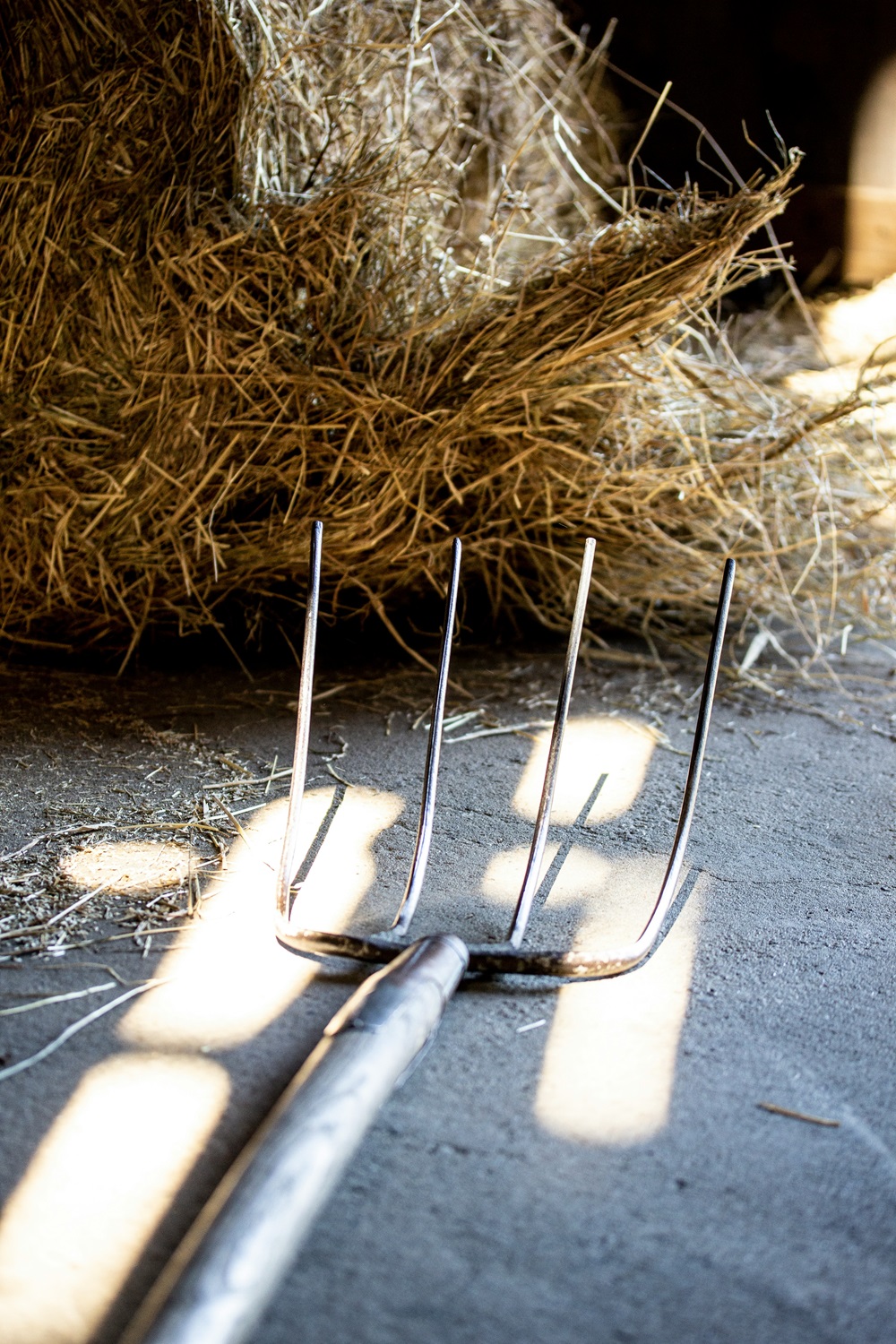
This winnowing fork looks kind of like a pitchfork. The farmer would scoop up a pile of the wheat and the chaff and throw it up in the air so that the wind would catch the worthless chaff and blow it away, but the heavier grains would fall back to the ground.
This is John’s picture of Jesus’ ministry. It will be like a farmer separating the wheat from the chaff.
Several places in the Old Testament, chaff is used to denote evil people or evil nations. In the Psalms, in Isaiah, in Zephaniah and other prophets, they use that word picture to talk about God’s judgment. Evil people, referred to as chaff, won’t be able to continue with their evil indefinitely. There will come a day of judgment.
John also talks about how Jesus will gather the wheat into his barns. The wheat here are those who follow him, those who love him, those who produce fruit in keeping with repentance.
So, when we’re talking about Jesus separating the good from the bad, we’re not talking about people who are good in their own right, from doing their own good things. They are good because they have repented of sin and turned to Jesus. They acknowledge that they are sinners and that they need a Savior.
It’s interesting that there is no middle ground here between wheat and chaff. There’s no third option mentioned that just gets kind of lumped in with the wheat. There’s wheat and there’s chaff.
It is left to the reader to evaluate themselves and say, “which am I? Am I wheat? Am I useful for God’s kingdom because I have repented of my sin and chosen to follow Jesus? Or do I just have the appearance of wheat but I’m an empty husk with nothing inside?”
Jesus’ ministry is going to be one of separating the good from the bad, the righteous from the unrighteous, the saints from the sinners. This is not a picture that we think of often when we think of Jesus’ ministry. It’s easier to think of the miracles, the healings, the feeding.
But it’s important for us to remember that, yes, he does miracles and loves people, but he is doing that as part of this ministry of drawing his people to himself and identifying those who don’t belong to him.
Our key truth for today is that Jesus separates the followers from the fakers.
Jesus separates those who truly follow him from those who are just pretending. He brings the reality of the heart to the surface.
Those who wrestle with it and repent of their sins are going to be gathered to Jesus like that wheat into the barn. But those who reject him and choose to live a fake life, who choose to rely on their own religion, their own goodness, will be burned up like chaff because judgment is coming.
Some things I want you to notice in this. This is not all bad news. There’s great mercy in this depiction of Jesus, because Jesus does gather the wheat to himself. He will gather his people, draw his people to himself.
There’s also mercy in this warning. It’s telling us what’s coming so that we can be ready, so that we don’t have to be caught off guard.
Today as you go, I have kind of a different activity for you. I want you to draw this scene. Yes, get out paper and a pencil and draw this picture of Jesus with his winnowing fork in his hand, like a pitchfork.
Maybe there’s a pile at his feet of the wheat and the chaff and the stalks all together. Or maybe you draw Jesus throwing it up in the air and it’s separating.
Maybe there’s a barn on one side where Jesus is going to gather the wheat and maybe there’s a fire on the other for the judgment that’s coming for those who reject Jesus.
And as you draw this, I want you to think about what feelings come up. What does this reveal about your own heart?
Are you struggling with this image of Jesus as a judge, as one who separates good from bad? I understand if that’s the case. I struggle with that image myself. If that’s you, go to prayer and ask God to help you with this image.
Perhaps you feel a great burden because of the people that you know and love who would be identified as chaff. Let this prompt you to pray for them and their repentance. Pray, too, that God would give you an opportunity to tell them more about the forgiveness that’s available in Jesus.
Maybe you don’t know where you stand. You don’t know which group you belong to.
Or maybe you know that you would be in the chaff and you’ve just been waiting. You say, “Yeah, at some point, I’ll choose to follow Jesus. I’ll repent eventually.” But you’ve been putting that off.
Today is the day of salvation.
Today is the time to choose Jesus.
Maybe, though, as you’re drawing this picture, you get a sense of gratitude. Then celebrate that God is going to gather you to himself, saving you from the fire.
 Amy C Walters
Leave a comment